Skip to content

TL;DR: Cerro de las Campanas is the hill where Emperor Maximilian of Habsburg was executed on June 19, 1867. The site includes the chapel Austria built in his memory, a museum, a giant statue of Benito Juárez, and panoramic views over the city. Entry is free.

Few places in Mexico carry as much historical weight as Cerro de las Campanas. This low hill on the western edge of Querétaro’s historic center is where a European empire’s ambitions in the Americas ended, and where the modern Mexican republic took its decisive step forward.

What Happened Here

In the 1860s, France – under Napoleon III – installed Archduke Maximilian of Habsburg as Emperor of Mexico, backed by French troops and a faction of Mexican conservatives. President Benito Juárez and his republican forces refused to recognize the regime and fought a years-long resistance campaign.

By 1867, Napoleon had withdrawn French support. Maximilian was captured at Cerro de las Campanas after his forces were defeated. He was court-martialed at the Teatro de la República in the city center.

On June 19, 1867 at 7:05 AM, Maximilian and his two Mexican generals – Miramón and Mejía – were executed by firing squad on this hill. Maximilian reportedly gave each of his executioners a gold coin and asked them not to shoot at his face.

His death ended French involvement in the Americas and was a defining moment for Mexican sovereignty. Juárez went on to complete his presidency and became one of Mexico’s most celebrated national figures.

The Austrian Chapel

Maximilian’s brother, Emperor Franz Joseph I of Austria, commissioned a small chapel to be built on the exact spot of the execution. The chapel stands today and remains a place of quiet reflection. Mass is occasionally held there.

The chapel is modest in scale, built in a simple Romanesque style that contrasts with the ornate colonial churches in the city center. Inside, there are images of Maximilian and a small altar. It is open during park hours and free to enter.

The Juárez Statue

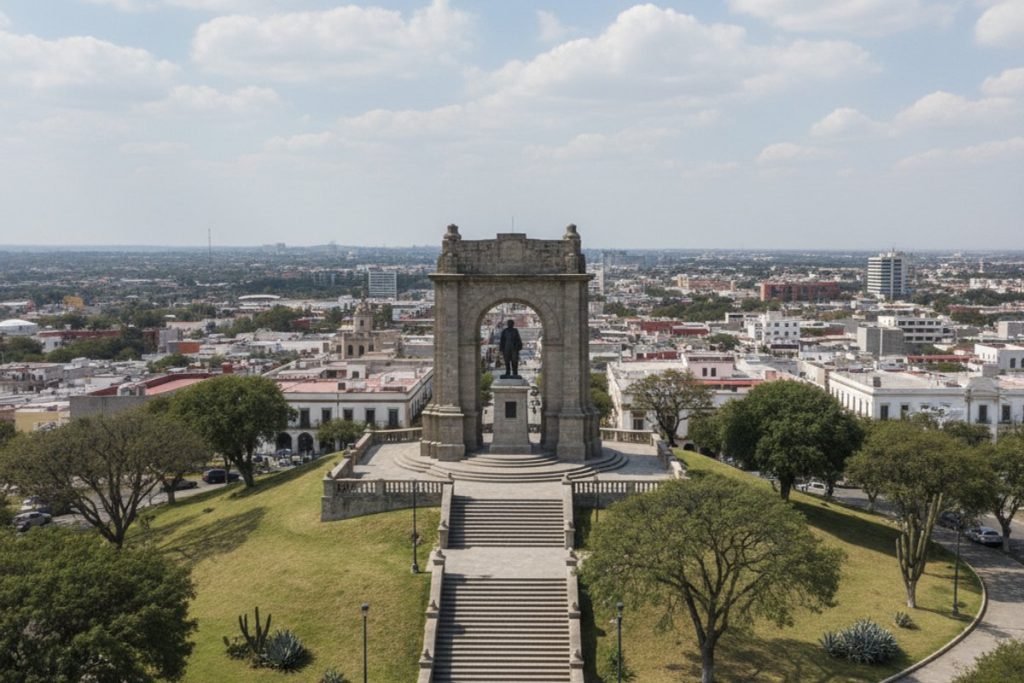
On the summit of the hill stands a massive stone sculpture of Benito Juárez, positioned so that he looks out over the city and the very ground where his order was carried out. The statue was erected to commemorate the republican victory and remains one of the largest public monuments in Querétaro.

The hilltop around the statue provides the best panoramic views of the city – the historic center, the aqueduct, and the surrounding mountains are all visible on a clear day.

The Museum

The Museo Regional del Cerro de las Campanas is located at the base of the hill. It documents the Second Mexican Empire, the French Intervention, and the specific events leading to the execution. Photographs, artifacts, and original documents are on display.

The museum is small – you can see everything in 45 minutes – but the context it provides makes the rest of the site much more meaningful. Check museum hours before visiting as they vary seasonally.

How to Get There

Cerro de las Campanas is at the western end of the historic center, about a 20-minute walk from Plaza de Armas. Walk along Av. Universidad heading west. By Uber or DiDi it takes five minutes and costs 30 to 50 MXN.

The park is open daily, generally from 9:00 AM to 5:00 PM. Entry to the grounds is free. The museum may have a small fee of 30 to 50 MXN; check the current pricing at the entrance.

Stay in the Heart of Querétaro

Hotel Mercury Inn puts you steps from the UNESCO Historic Center. Check live rates and book directly below.

What Happened at Cerro de las Campanas

On June 19, 1867, Emperor Maximilian I of Mexico was executed by firing squad at the hill now known as Cerro de las Campanas. With him died two of his generals, Miguel Miramón and Tomás Mejía. The execution ended the Second Mexican Empire, a three-year experiment in which Archduke Maximilian of Austria, installed by Napoleon III of France, attempted to rule Mexico as emperor against the republican forces led by Benito Juárez.

Querétaro had been the final stronghold of the imperial army. After a 71-day siege, the city fell and Maximilian was captured, tried by a military court, and executed despite appeals from European monarchs. The event remains one of the most consequential moments in 19th-century Mexican history.

The Memorial Chapel and Park

The small neo-Gothic Capilla de Maximiliano sits at the top of the hill, commissioned by the Austrian government after Maximilian’s body was returned to Vienna. A larger bronze statue of Benito Juárez, 10 meters tall, looks out from the hillside beside it. The contrast is deliberate: the executed emperor’s chapel and the triumphant republican president’s monument on the same site.

The park around the hill is free and open daily. Entry to the interpretive museum inside costs around 40 MXN. Most visitors spend 45 to 90 minutes here. The views stretch across the full city, and on clear days you can see the Sierra Gorda mountains to the east.

How to Visit and What to Bring

The park is on the west side of the city. An Uber from Centro Histórico costs about 80 to 120 MXN and takes 10 minutes. Walking is possible but uphill and not especially scenic until you reach the hill itself. City buses heading west along Avenida Universidad stop nearby for 12 MXN.

Bring water and a hat. The climb to the chapel is moderate and the paths are unshaded at the summit. Morning visits are cooler; late afternoon visits give better light for photos of the chapel and the Juárez statue. Plan 90 minutes for a full visit including the museum.

VERIFIED GUEST ★★★★★ 5/5 — Juan R Capobianco

“Excellent to stay while working. The restaurant is good, not special dishes, but good enough to stay there without going out. Waiters are also very kind and you can feel yourself very well cared.”

See More Reviews →

Hotel Mercury Inn Photos

Disclosure: booking links on this page are affiliate links.

cerro de las campanas queretaro
Hotel Mercury Inn Querétaro Hotel Mercury Inn Querétaro

For official state heritage information, see the Querétaro state tourism board.

Frequently Asked Questions

What is Cerro de las Campanas?

A hill on the west side of Querétaro where Emperor Maximilian I of Mexico was executed by firing squad on June 19, 1867, ending the Second Mexican Empire.

Is there an entry fee at Cerro de las Campanas?

The park is free and open daily. The interpretive museum on the hill costs about 40 MXN.

How do I get there from Centro Histórico?

An Uber costs 80 to 120 MXN and takes 10 minutes. City buses heading west on Avenida Universidad stop nearby for 12 MXN.

How long does a visit take?

45 minutes to 90 minutes depending on how long you spend at the chapel, the Juárez statue, and the small museum.

Is the climb difficult?

Moderate. Paths are paved and well-maintained. The summit has little shade, so bring water and a hat.

Can I see the whole city from the top?

Yes. On a clear day you can see across the city and to the Sierra Gorda mountains to the east.

Leave a Reply

Your email address will not be published. Required fields are marked *